Wandering Through West Africa’s Hidden Heart: Ouagadougou Unhurried
Have you ever felt the urge to slow down, to let a place reveal itself not in highlights, but in quiet moments? In Ouagadougou, Burkina Faso, I discovered a rhythm unlike anywhere else—where sunbaked red earth meets vibrant markets, and time moves with purpose, not haste. This isn’t a city of monuments, but of life unfolding. Slowing down here wasn’t just a travel style—it was the only way to truly see. Amid the dust and melody, the laughter in alleyways and the hum of handwoven cloth being stretched on looms, Ouagadougou offers a rare invitation: to witness Africa not as a spectacle, but as a lived reality. And in doing so, to rediscover the value of presence.
The Pulse of Ouagadougou: More Than a Capital
Ouagadougou, often affectionately called Ouaga, is the political, cultural, and economic heartbeat of Burkina Faso, a landlocked nation in West Africa. Far from the bustling coastal capitals of Lagos or Abidjan, Ouagadougou pulses with a grounded authenticity that reflects the resilience and warmth of its people. As the largest city in the country, it serves not merely as an administrative hub but as a gateway to understanding the broader Sahelian region—a landscape shaped by seasonal rhythms, traditional values, and a deep connection to community. The city sprawls across a vast, flat plain dotted with low-rise buildings, red laterite soil, and clusters of baobab and acacia trees that stand like sentinels against the sky.
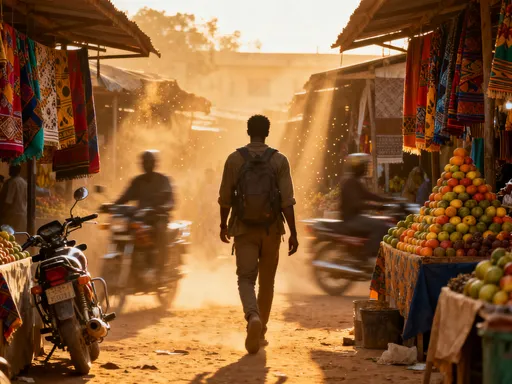
The atmosphere in Ouagadougou is both vibrant and contemplative. The air carries the scent of grilled brochettes from roadside stands, mingled with the dry, earthy aroma of dust lifted by passing motorbikes and the occasional gust of harmattan wind. Sounds layer upon one another—the call to prayer from neighborhood mosques, the rhythmic clatter of women pounding millet in wooden mortars, the honking of bush taxis navigating crowded roundabouts. These sensory imprints form the city’s true identity, one that cannot be captured through hurried sightseeing. Instead, Ouagadougou reveals itself gradually, through moments of stillness and observation.
With a tropical savanna climate, the city experiences distinct wet and dry seasons. The dry season, from November to May, brings intense sunshine and rising temperatures, often exceeding 40°C (104°F) in the peak months. This heat shapes daily life, prompting residents to adjust their routines—early mornings and late afternoons become the preferred times for errands and socializing, while midday is reserved for rest. The rainy season, though brief, transforms the landscape, turning dusty paths into green corridors and filling the air with the scent of wet earth. These climatic patterns are not just background details; they are central to the city’s rhythm and must be respected by visitors seeking to engage meaningfully.
What makes Ouagadougou exceptional is its resistance to the pressures of fast-paced tourism. There are no sprawling shopping malls or international theme parks. Instead, life unfolds in open-air markets, family compounds, and shaded courtyards where elders sit in quiet conversation. To travel here with a checklist mindset is to miss the essence entirely. The city rewards patience. A simple gesture—sharing a cup of attaya tea with a local vendor, listening to a street musician play the kora—can become a defining memory. In this context, slow travel is not a luxury; it is a necessity for genuine connection.
Why Slow Travel Fits This City Perfectly
The philosophy of slow travel—emphasizing depth over distance, presence over productivity—finds its natural home in Ouagadougou. Unlike destinations designed for tourist itineraries, this city does not perform for cameras. Its beauty is embedded in the everyday: the way a grandmother adjusts her brightly colored pagne fabric as she walks, the deliberate pace of bargaining in the market, the shared silence among neighbors watching the sunset. These moments are not staged; they are lived. To rush through them is to render them invisible.
One of the most profound lessons Ouagadougou offers is the value of observation. In Western cultures, travel is often equated with activity—visiting landmarks, ticking off experiences, accumulating photos. But in Ouaga, the most meaningful encounters arise from stillness. Sitting at a roadside café for an hour, watching the flow of life, one begins to notice patterns: the schoolchildren in matching uniforms returning home, the artisans repairing sandals with leather scraps, the elderly man reciting proverbs under a tree. These are not attractions; they are expressions of culture in motion.
Slow travel here also fosters mutual respect. When visitors take the time to learn a few words in Mooré or Dioula, the local languages, or to ask permission before photographing, they signal a willingness to engage rather than extract. This openness is often reciprocated with kindness—a shared meal, an invitation to a local celebration, a story passed down through generations. These exchanges are not transactional; they are human. They remind us that travel, at its best, is about relationship-building, not consumption.
Moreover, the city’s infrastructure supports a slower pace. Public transportation is limited, and navigation can be challenging without local knowledge. Rather than viewing this as a drawback, slow travelers see it as an opportunity. Getting lost in a residential neighborhood might lead to an impromptu conversation with a tailor at his sewing machine, or a chance to taste freshly made to (millet porridge) from a street vendor. These unplanned detours are not inefficiencies—they are the soul of the journey. In Ouagadougou, the path less traveled is not a scenic route; it is the only route worth taking.
The Art of Wandering: Discovering Urban Landscapes at Leisure
One of the most rewarding ways to experience Ouagadougou is simply to walk. The city’s neighborhoods offer a rich tapestry of contrasts, from the orderly grid of Ouaga 2000, with its government offices and modern apartment buildings, to the labyrinthine alleys of the old city center, where traditional compounds with high mud walls enclose family life. Walking allows travelers to feel the city’s pulse, to move at the same speed as its residents, and to notice details that would be missed from a moving vehicle.
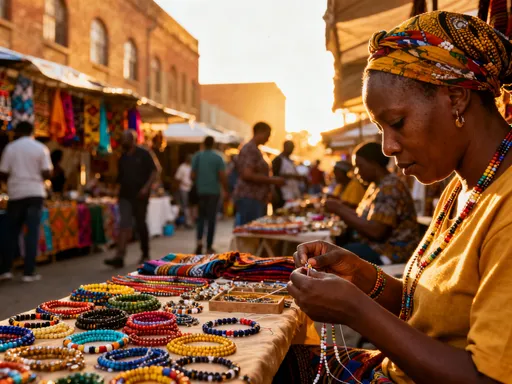
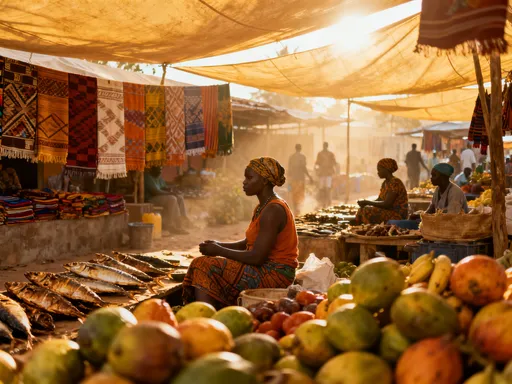
A morning stroll through the Central Market—a sprawling, open-air bazaar—reveals the city’s vibrant economic life. Stalls overflow with mangoes, shea nuts, dried fish, and bolts of hand-dyed cotton in dazzling patterns. Women in headwraps and colorful dresses move with practiced efficiency, weighing produce on brass scales and calling out prices in a melodic cadence. The market is not just a place to shop; it is a social hub, a stage for daily rituals, and a living museum of craftsmanship. Vendors often welcome curious visitors, offering samples of roasted peanuts or explaining the uses of medicinal herbs.
Returning to the same market at different times of day offers a deeper understanding of its rhythms. Early in the morning, it is a place of preparation—traders unloading goods from wooden carts, sweeping the ground, setting up canopies. By midday, the heat intensifies, and activity slows. By late afternoon, it becomes a place of closure and conversation, as vendors pack up and share stories over cups of sweet tea. This repetition—observing the same space in different lights—mirrors the essence of slow travel: to see not just what is visible, but how it changes, how it breathes.
Another rewarding walk leads to the Place des Cinéastes, a cultural square dedicated to Burkina Faso’s thriving film industry. The country hosts FESPACO, the Panafrican Film and Television Festival of Ouagadougou, every two years, drawing artists and audiences from across the continent. Even outside the festival season, the square hums with creative energy—students rehearsing plays, musicians testing new compositions, filmmakers discussing scripts under shaded pavilions. Here, art is not confined to galleries; it spills into the streets, becoming part of public life. For travelers, this is a reminder that culture is not a performance for outsiders—it is a lived practice, evolving daily.
Nature’s Embrace: Green Spaces in the Sahel
Despite its arid climate, Ouagadougou is surprisingly green. The city has made deliberate efforts to preserve and expand its green spaces, recognizing their importance for both ecological balance and community well-being. Parks and gardens serve as oases of calm, offering residents and visitors alike a chance to reconnect with nature amidst the urban bustle.
The National Museum of Burkina Faso, housed in a striking circular building inspired by traditional Mossi architecture, is surrounded by well-maintained gardens that showcase native flora. Walking through this space, one encounters towering kapok trees, fragrant frangipani, and clusters of succulents adapted to the dry environment. The gardens are not merely decorative; they are educational, with signs identifying plant species and their traditional uses in medicine, construction, and food. Families often picnic here, children playing near fountains while elders read or nap on shaded benches. The museum itself houses artifacts from across the country’s ethnic groups, including masks, musical instruments, and textiles, but it is the surrounding greenery that invites lingering.
Nearby, the Artisanal Village offers another fusion of nature and culture. Located on the outskirts of the city, this cooperative space brings together potters, weavers, sculptors, and jewelers who work beneath the shade of acacia trees. Visitors are encouraged to watch artisans at work, ask questions, and purchase directly from the creators. The setting is peaceful, with the sound of hammers shaping metal and looms clicking in rhythm. This is not a tourist trap; it is a functional community space where craft and environment coexist. The trees provide natural cooling, reducing the need for artificial shelter, and their presence underscores the deep connection between creativity and the land.
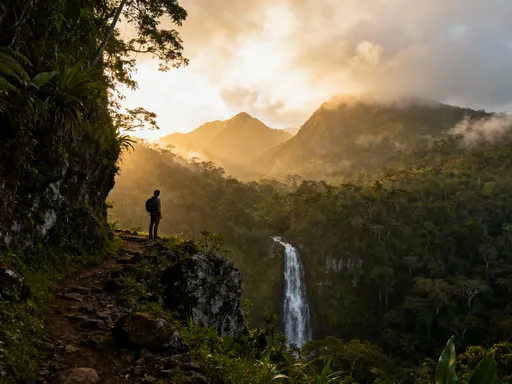
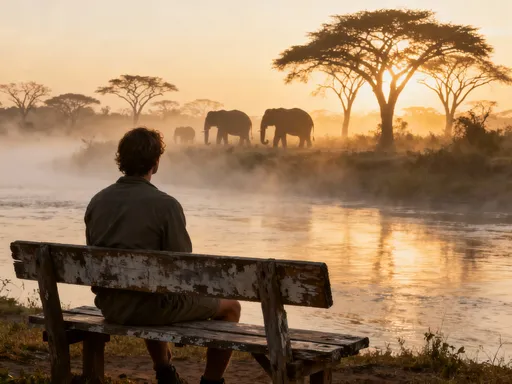
For those willing to venture beyond the city limits, the Kaboré Tambi National Park offers a more immersive natural experience. Located about 70 kilometers south of Ouagadougou, this protected area is one of the last strongholds for elephants in Burkina Faso. Guided eco-treks allow visitors to observe wildlife—antelope, warthogs, baboons, and occasionally elephants—in their natural habitat. Local guides, often from nearby villages, lead these excursions, sharing knowledge of animal behavior, plant uses, and conservation challenges. The park exemplifies sustainable tourism: it generates income for local communities while protecting fragile ecosystems. For travelers, it is a powerful reminder that nature and culture are not separate realms—they are intertwined.
Cultural Immersion Through Craft and Music
In Ouagadougou, art is not confined to museums or performances; it is woven into the fabric of daily life. The city’s creative spirit is most vividly expressed through craft and music, both of which thrive in communal settings. Engaging with these traditions slowly—spending time in workshops, listening to rhythms, learning the stories behind symbols—leads to a deeper appreciation than any souvenir ever could.
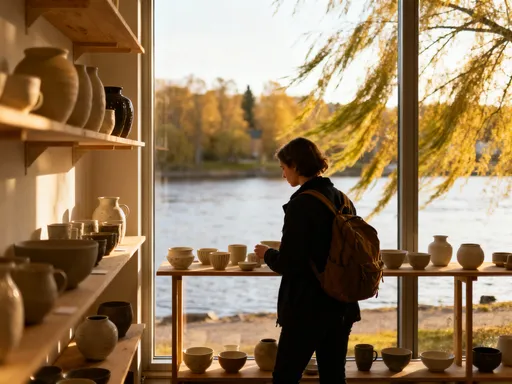
Pottery, in particular, holds deep cultural significance. In studios inspired by the architectural styles of the Tiebele people, women shape clay by hand, using techniques passed down through generations. Each piece carries meaning—the patterns etched into the surface may represent proverbs, family lineage, or natural elements. Visitors who take the time to sit with a potter, to feel the cool clay and ask about the process, often leave with more than a handmade bowl; they carry a story, a connection. These workshops are not performances; they are workplaces, and participation is a privilege, not a right.
Music, too, is a living tradition. In open-air courtyards, especially in the evenings, drumming circles form spontaneously. The djembe, balafon, and dundun drums create complex polyrhythms that pulse through the air, drawing in listeners and dancers. Unlike staged concerts, these sessions are participatory. A visitor might be invited to try a simple rhythm, to clap along, or simply to sit and absorb the energy. The music is not entertainment; it is communication, a way of preserving history and strengthening community bonds.
When available, attending a Sukala performance offers another layer of cultural insight. Sukala is a traditional storytelling form that combines spoken word, song, and gesture, often performed by griots—hereditary historians and praise-singers. These narratives recount myths, historical events, and moral lessons, serving as oral archives of collective memory. While not always accessible to foreign travelers due to language barriers, even partial understanding—supported by translation or context—can be profoundly moving. The experience underscores a central truth: in Ouagadougou, culture is not a product to be consumed, but a process to be witnessed and respected.
Practical Insights: Navigating the City with Respect and Ease
Traveling in Ouagadougou requires preparation, not because the city is dangerous, but because it operates on different assumptions than Western urban centers. Understanding local norms and practical realities ensures a smoother, more respectful journey. Transportation, language, safety, and cultural etiquette are key considerations.
Getting around the city is most efficiently done by molotaxi—motorbike taxis that are ubiquitous and affordable. Riders sit behind the driver, often wearing a provided helmet. While exhilarating, this mode of transport requires caution; travelers should choose licensed drivers and avoid night rides when visibility is poor. Bush taxis, shared minibuses that follow fixed routes, are another option for longer distances, though they can be crowded and less predictable. For those seeking comfort, a few reputable car services offer private transfers with English-speaking drivers.
Language plays a crucial role in connection. French is the official language, used in government, education, and signage, but Mooré and Dioula are widely spoken in daily life. Learning a few basic phrases—such as “N taa?” (How are you?), “Nakuyega” (Thank you), and “S’il vous plaît” (Please)—goes a long way in building rapport. Smiles and gestures often bridge gaps where words fail. It is also important to dress modestly, especially for women; covering shoulders and knees is respectful and helps avoid unwanted attention.
Safety in Ouagadougou is generally good for travelers who exercise common sense. Petty theft can occur in crowded markets, so valuables should be secured. The U.S. and U.K. governments advise caution due to regional security concerns, particularly near borders, so staying informed through official travel advisories is recommended. Health-wise, travelers should drink bottled or purified water, use sunscreen, and carry rehydration salts, especially during the hot season. Mosquito protection is essential to prevent malaria, and routine vaccinations should be up to date.
Accommodation options range from small guesthouses to mid-range hotels. Locally run lodges, such as those in residential neighborhoods, often provide a more authentic experience, with home-cooked meals and opportunities to interact with hosts. These establishments support the local economy and foster meaningful exchange. Travelers should manage expectations—power outages and intermittent internet are possible, but they also offer a chance to unplug and be present.
The Lasting Impact of a Slower Journey
Leaving Ouagadougou, one does not carry souvenirs so much as transformations. The city does not imprint itself through grand sights, but through subtle shifts in perspective. It teaches that travel is not about collecting places, but about deepening presence. The woman who smiled while selling mangoes, the elder who shared a proverb under a tree, the child who waved from a doorway—these are the moments that linger, not because they were extraordinary, but because they were real.
In a world that glorifies speed, Ouagadougou stands as a quiet counterpoint. It reminds us that understanding requires time, that connection demands patience, and that beauty often resides in the ordinary. The slow traveler does not come to conquer a destination; they come to be changed by it. They learn to listen more than speak, to observe before acting, to accept uncertainty as part of the journey.
This approach has lasting effects. Back home, the rhythms of Ouaga echo in small ways—a pause before rushing into a meeting, a deeper appreciation for a shared meal, a willingness to sit with silence. The city becomes not just a memory, but a lens through which to see life differently. It challenges the notion that more is better, that faster is superior. Instead, it offers a different metric: depth, warmth, authenticity.
Ouagadougou does not welcome everyone. It reserves its gifts for those who come with humility, with openness, with the willingness to move at its pace. For the slow traveler, it is not just a destination—it is a revelation. And in that revelation lies a quiet truth: sometimes, the most profound journeys are the ones that ask us to stop, to breathe, and to simply be.