Beneath the Turquoise: A Slow Journey Through Bora Bora’s Wild Beauty
Imagine turquoise waters so clear they mirror the sky, mountains cloaked in emerald, and silence so deep you hear only the rhythm of the waves. Bora Bora isn’t just a destination—it’s a living canvas of natural wonders. I went not to check boxes, but to slow down and let the island reveal itself. What I found was beyond postcards: raw, untouched magic in every sunrise, lagoon, and breeze. This is not a place to rush through, but to breathe with, to move through with quiet reverence. Here, time unfolds like the tide—gentle, inevitable, and full of grace.
The Myth and the Reality of Bora Bora
Bora Bora is often portrayed as the ultimate luxury escape—a honeymoon haven where overwater bungalows dangle above glassy lagoons and champagne flows as freely as the ocean breeze. While this image holds truth for many, it captures only a surface layer of what the island truly offers. The reality, for those willing to look beyond the brochures, is far more profound. Bora Bora is not merely a backdrop for romance or indulgence; it is a dynamic ecosystem shaped by volcanic fire, coral time, and Pacific currents. Its iconic silhouette—rising dramatically from the sea with twin peaks cloaked in mist—has drawn travelers for generations, but few pause long enough to understand its soul.
The island’s geography is nothing short of extraordinary. Born from a volcanic eruption over three million years ago, Bora Bora today stands as a remnant of that ancient force. The central peaks, including the majestic Mount Otemanu, are the jagged remnants of a caldera, now softened by millennia of rain and growth. Surrounding this core is a barrier reef, forming a vast lagoon that shifts in color from sapphire to jade depending on the sun’s angle. This natural amphitheater of water and land creates a sanctuary not just for tourists, but for countless species of fish, rays, and coral formations that thrive in its protected embrace.
From the air, the contrast is breathtaking. The deep indigo of the open Pacific gives way abruptly to a luminous, almost surreal blue. The reef appears as a delicate lace border, dotted with tiny motus—small, palm-covered islets that rise like emeralds from the water. Most visitors arrive by plane from Tahiti, and that first descent offers a moment of awe: the realization that this is not just another tropical island, but a rare geological masterpiece. Yet, too often, that awe is quickly replaced by schedules, tours, and checklists. The true essence of Bora Bora is not in how much you see, but in how deeply you see it.
Why Slow Travel Fits Bora Bora Perfectly
Slow travel is not a trend—it is a return to the original spirit of journeying. It means moving with intention, allowing space for stillness, and embracing the rhythm of a place rather than imposing your own. In Bora Bora, this philosophy is not just ideal; it is essential. The island does not reward haste. Its beauty unfolds in subtle shifts—the way light dances on the lagoon at dawn, the sound of a heron taking flight from a shallow flat, the warmth of sun-baked coral under bare feet. These moments are lost to those who rush from one activity to the next.
Life on the island moves at its own pace. Fishermen paddle out in wooden canoes before sunrise, their silhouettes cutting across the pink-streaked sky. Children play barefoot on the shore, building sandcastles that will be washed away by the tide, unconcerned with permanence. Boats drift with the current rather than fight it, their engines idling as crews wait for the right moment to drop anchor. This is not inefficiency—it is harmony. Visitors who align themselves with this rhythm find that time stretches, not contracts. A single afternoon spent watching the water can feel richer than a week of itinerary-driven sightseeing.
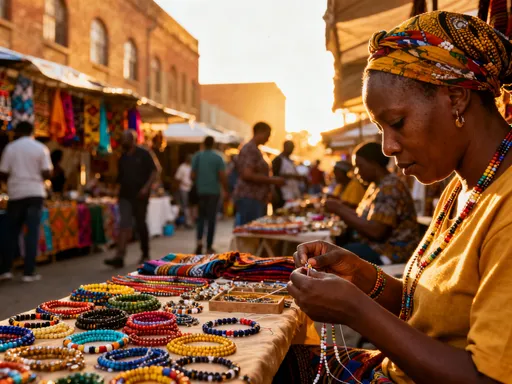
Moreover, slow travel fosters deeper connection—not just with nature, but with the people and culture of Bora Bora. When you stay longer, you begin to recognize faces, learn a few words of Tahitian, and accept an invitation to a local family’s meal. These interactions are not transactional; they are human. They remind us that travel is not about collecting experiences like souvenirs, but about expanding our sense of belonging in the world. In this context, the real luxury of Bora Bora is not found in five-star resorts, but in the gift of time—the freedom to be present, to listen, and to belong, even if only for a little while.
The Heartbeat of the Island: Mount Otemanu and Its Legacy
At the center of Bora Bora’s story stands Mount Otemanu—a name that resonates with both geological and cultural weight. Rising 727 meters above sea level, its steep, forested slopes and jagged summit are visible from nearly every point on the island. It is not a mountain to be conquered, but one to be respected. Ancient Polynesians regarded it as sacred, a dwelling place of ancestral spirits and a navigational landmark for voyaging canoes. Even today, its presence commands reverence. To look upon Otemanu is to witness the raw power of nature, shaped over millennia into something both formidable and beautiful.
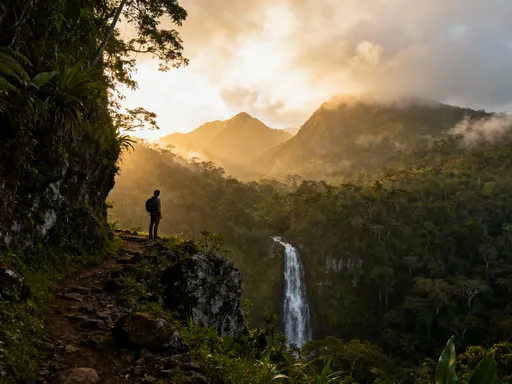
A sunrise hike to a viewpoint near the base of the mountain offers one of the most transformative experiences on the island. The trail begins before dawn, winding through dense foliage where the air is thick with the scent of damp earth and wild ginger. The path is not paved, nor is it crowded. This is not a commercialized trek, but a quiet pilgrimage for those who seek a deeper connection. As the first light breaks over the eastern reef, the lagoon below begins to glow, shifting from shadow to silver to a radiant turquoise. The contrast between the dark silhouette of the peak and the awakening water is nothing short of cinematic.
But the true magic lies in the details. The call of the Tahitian monarch bird echoes through the trees. A gecko scurries across a sun-warmed rock. Mist curls around the summit like smoke, revealing glimpses of the peak before retreating again. There is no rush, no pressure to reach a summit. The journey itself is the destination. This is slow travel in its purest form—movement that serves contemplation, not conquest. By the time the sun clears the horizon, the visitor is not just seeing the island, but feeling it. Mount Otemanu, in all its quiet grandeur, becomes a mirror for the stillness within.
The Lagoon: A Living Palette of Blue
If Mount Otemanu is the island’s soul, the lagoon is its heartbeat. Spanning over 100 square kilometers, this vast expanse of water is not just beautiful—it is alive. The colors alone are a wonder: deep navy where the ocean meets the reef, soft aquamarine over sandy flats, and vibrant cobalt in the channels where currents swirl. These hues are not static; they shift with the weather, the time of day, and the movement of clouds. To float in the lagoon is to be suspended in a living painting, one that changes with every breath.
Snorkeling in the quieter sections of the reef offers an intimate encounter with this underwater world. At sites like Coral Gardens or the Anau sector, visibility often exceeds 30 meters. The water is so clear that it feels like flying rather than swimming. Reef sharks glide past with quiet confidence, their movements effortless. Stingrays rest on the sandy bottom, their wings pulsing gently with the current. Schools of parrotfish, butterflyfish, and emperor fish dart through coral formations shaped like brains, antlers, and lace. Every inch of the reef teems with life, much of it delicate and irreplaceable.
Responsible tourism plays a crucial role in preserving this ecosystem. Many local operators now prioritize eco-friendly practices: limiting group sizes, avoiding anchor damage by using mooring buoys, and educating visitors about not touching or standing on coral. Some guides carry underwater slates to point out species without disturbing them. These small acts of care make a significant difference. Choosing such operators is not just about safety or comfort—it is an ethical decision. When travelers respect the lagoon, they become stewards, not just spectators. And in return, the lagoon reveals its secrets: a hidden cave, a rare octopus, a moment of perfect stillness beneath the surface.
Hidden Shores and Secret Moments
Beyond the well-trodden paths and popular motus lie places known only to locals or those who take the time to explore with curiosity and humility. These hidden shores are not marked on most maps, nor are they included in standard tours. They are found by asking questions, listening to fishermen, or simply drifting with no destination in mind. One such spot is a small, uninhabited islet on the northern edge of the lagoon, accessible only by a narrow channel. Arriving there requires patience—the tide must be right, the wind calm—but the reward is solitude so complete it feels sacred.
I spent an afternoon on this motu, sitting beneath a single coconut palm as a distant rainstorm passed over the water. The sky darkened in one direction while sunlight still touched the mountains behind me. The lagoon transformed—first silver, then gunmetal gray, then streaked with gold as the storm moved on. Rain fell in curtains, never reaching me, but turning the air cool and fresh. There were no cameras, no voices, no need to capture the moment. It was enough to be there, to witness it unfold. Such experiences cannot be scheduled or guaranteed. They arise from openness, from the willingness to wait, to be still, to let the island offer what it will.
These unplanned moments often become the most treasured. A child offering a flower on the beach. A shared smile with a local woman weaving pandanus leaves. The taste of fresh coconut water handed to you by a man repairing his boat. These are not highlights curated for tourists; they are glimpses into real life. They remind us that the most meaningful travel is not about seeing everything, but about being open to anything. In Bora Bora, where beauty is abundant, the rarest commodity is not a view—it is presence.
Connecting with the Land: Nature-Based Activities That Respect the Island
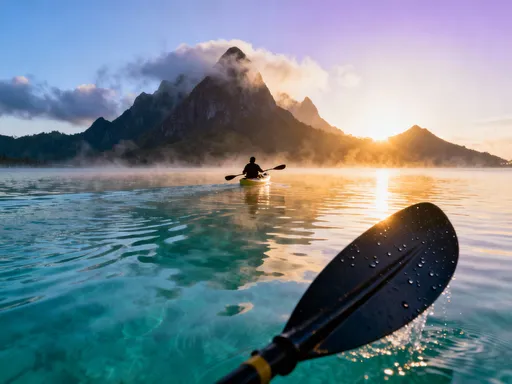
There are many ways to engage with Bora Bora, but not all are equal in their impact. Motorized tours, while convenient, often skim the surface—both literally and figuratively. They create noise, disturb wildlife, and limit opportunities for quiet observation. In contrast, low-impact activities invite a deeper form of connection. Kayaking at dawn, for instance, allows you to glide over the water with only the sound of your paddle dipping into the lagoon. The early light gilds the peaks, and the air is cool and still. You might pass a turtle surfacing for air or a flock of terns diving for fish. There is no rush, no commentary—just the rhythm of your movement and the beauty around you.
Paddleboarding offers a similar intimacy. Standing on the board, you become part of the water’s surface, balanced between sky and sea. In the narrow channels between motus, the water is so calm it reflects the clouds like a mirror. You can float motionless, watching fish swim beneath your feet. Some guided nature walks along the coast or through restored native forests also provide meaningful engagement. Led by local naturalists, these walks teach about endemic plants, traditional uses of resources, and the importance of conservation. You might learn how to identify the tiare flower, the national flower of Tahiti, or how coconut husks are used in natural filtration systems.
These activities do more than entertain—they educate and inspire. They shift the traveler’s role from passive observer to active participant in the island’s story. And because they are low-impact, they help preserve the very beauty they allow you to experience. When more visitors choose these quieter, more respectful forms of exploration, the pressure on fragile ecosystems decreases. The island breathes easier. And the traveler, in turn, carries home not just memories, but a sense of responsibility—a quiet promise to protect such places wherever they may go.
Leaving Lightly: The Lasting Imprint of Mindful Travel
Departure from Bora Bora is not an end, but a transition. The island does not leave you unchanged. Its colors linger in your dreams, its silence echoes in your thoughts. But more than that, it leaves you with a new understanding: that true beauty is not something to be consumed, but to be honored. The most profound lesson of slow travel is not what you see, but how you see it. Bora Bora teaches patience, presence, and humility. It shows that the greatest luxury is not comfort, but connection.
To visit mindfully is to leave lightly—to take only photographs, memories, and lessons, and to give back through respect, care, and awareness. It means choosing accommodations that prioritize sustainability, supporting local businesses, and following guidelines designed to protect coral and wildlife. It means speaking softly, moving slowly, and listening more than you speak. Future visitors will inherit the same lagoons, mountains, and skies—but only if today’s travelers act as guardians, not guests.
Bora Bora is not a postcard. It is not a trophy. It is a living, breathing world, shaped by time and tide, culture and nature. It rewards those who approach it not with entitlement, but with awe. To move through it slowly is to walk in reverence. And in that reverence, we find not just the soul of the island, but a reflection of our own. The turquoise waters do not just mirror the sky—they mirror the depth of our attention, the quiet of our hearts, and the possibility of a different way to travel, and to live.