Feast on the Edge of the World: A Culinary Journey Through Lofoten
Nestled above the Arctic Circle, the Lofoten Islands are a realm where jagged peaks plunge into cold northern waters and age-old traditions thrive in harmony with nature. Here, food is more than sustenance—it’s a story of survival, seasonality, and soul. From drying cod hung like snow-draped flags to cozy seaside cabins serving creamy salmon stew, every bite carries the wild spirit of the North. This is not just a trip; it’s a taste of Norwegian heritage carved by ice and sea. For travelers seeking authenticity, Lofoten offers a rare convergence of breathtaking landscape and deeply rooted culinary practice, where meals unfold as rituals and ingredients speak of tides, wind, and time.
Arrival in the Wild: First Impressions of Lofoten
As the plane descends toward Svolvær or Bodø, the first glimpse of Lofoten steals the breath. A chain of granite spires rises abruptly from the Norwegian Sea, their sharp ridges softened only by glacial valleys and ribbon-like beaches of white quartz sand. In summer, the sun never truly sets—light lingers in a golden haze past midnight, casting long shadows across red-painted rorbuer perched on stilts above the water. In winter, darkness drapes the archipelago like velvet, broken only by the shimmer of northern lights dancing above silent fjords. This dramatic duality defines life in Lofoten, shaping not only how people live but also what they eat.
The environment here is both generous and demanding. The Gulf Stream tempers the Arctic chill, allowing fishing and limited agriculture to flourish, but the terrain remains rugged, unforgiving, and remote. There are no vast farmlands or industrial farms—only small plots, rocky inlets, and an enduring dependence on the sea. This reality has cultivated a culture of resourcefulness, where nothing is wasted and every season is prepared for with precision. The Norwegian concept of *friluftsliv*—a deep appreciation for open-air living—permeates daily routines. Families hike coastal trails in rubber boots, gather cloudberries in late summer, and dry fish on wooden racks that stand like sentinels along the shore.
It is within this rhythm of nature that Lofoten’s food culture takes root. Meals are not rushed but observed, almost ceremonial. A morning might begin with thick rye bread and butter, accompanied by slices of smoked salmon caught just hours before. Evenings bring stews simmered for hours, their aromas mingling with the scent of damp wool and sea salt in the air. To arrive in Lofoten is to step into a world where food is inseparable from place, where the act of eating becomes an act of belonging. The landscape does not merely feed the body—it nourishes identity.
The Heart of Lofoten’s Pantry: Stockfish and the Drying Tradition
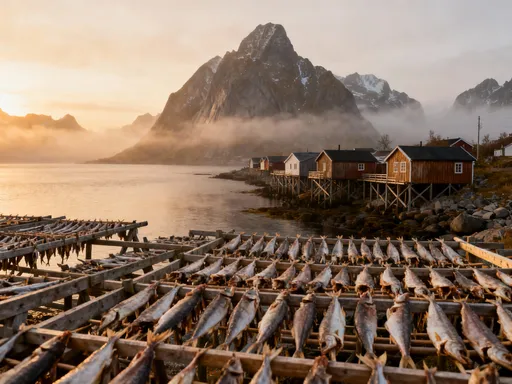
At the core of Lofoten’s culinary identity lies *tørrfisk*—air-dried cod, a preservation method perfected over a thousand years. This is not merely dried fish; it is a cultural artifact, a lifeline of the North, and a cornerstone of Norwegian heritage. Each spring, as the Arctic winds still bite and the days grow longer, fishermen haul in vast quantities of cod during the *skrei* migration—a natural phenomenon where mature Atlantic cod swim from the Barents Sea to spawn in the nutrient-rich waters around Lofoten. These fish, lean and firm from their long journey, are gutted, beheaded, and hung on wooden frames known as *hjell*, left to dry under the crisp spring air for four to six weeks.
The sight of *hjell* stretching across villages like open-air cathedrals is unforgettable. Thousands of fish hang in neat rows, swaying gently in the wind, their surfaces slowly transforming under the interplay of cold air, sunlight, and sea breeze. The process requires no artificial heat or smoke—only nature’s elements. The result is *stockfish*, a rock-hard product that can be stored for years without spoiling. This method, recognized by UNESCO as part of Norway’s intangible cultural heritage, once fueled trade routes across Europe, with Lofoten’s cod reaching markets in Italy, Nigeria, and the Caribbean.
Locals speak of *tørrfisk* with reverence. It is more than food—it is memory, resilience, and continuity. To rehydrate and prepare it takes patience: soaking for days, then slow-cooking until tender. Traditional dishes like *baccalà* or *klippfisk* stew reflect this labor of love, often served with potatoes, onions, and a creamy sauce. In small coastal homes, elders recall childhoods spent helping grandparents sort and turn the drying fish, their hands learning the rhythm of the seasons. Even today, families gather in the spring to inspect the *hjell*, checking for mold or moisture, ensuring the tradition endures.
The economic and cultural significance of stockfish remains profound. While modern refrigeration has reduced its necessity as a preservative, it has gained new value as a gourmet ingredient and symbol of authenticity. Chefs in Oslo and abroad seek out Lofoten stockfish for its purity and depth of flavor, a testament to the islands’ unspoiled waters and time-honored methods. To walk among the drying racks is to witness a living archive—a silent, wind-swept monument to human ingenuity and nature’s generosity.
From Ocean to Table: The Art of Seafood Craftsmanship
Lofoten’s waters are among the cleanest and most biologically rich in the world, a fact reflected in the quality and variety of its seafood. Fishing here is not industrial but intimate—a practice governed by seasonal cycles, strict quotas, and deep respect for marine ecosystems. Most boats are small, family-owned vessels that return to harbor each evening with their catch sorted by hand. This artisanal approach ensures minimal bycatch, reduced environmental impact, and unparalleled freshness.
Among the prized catches is the Arctic char, a cold-water fish with delicate pink flesh and a subtle, buttery flavor. Found in clear mountain lakes and cold fjords, it is often pan-seared with dill and served with new potatoes. Equally celebrated are hand-dived scallops, harvested by free divers who descend into the frigid depths to collect them one by one. These scallops, sweet and tender, are typically served raw with lemon and sea herbs or lightly seared to preserve their delicate texture. Lobster from Nusfjord, a preserved fishing village turned cultural site, is another delicacy—caught in wooden traps and boiled simply to highlight its natural sweetness.
Sustainability is not a marketing term here—it is a way of life. Fishermen follow strict regulations set by the Norwegian Directorate of Fisheries, ensuring stocks remain healthy for future generations. Many participate in co-management programs, contributing data and insights to help shape policy. The result is a seafood supply chain that is transparent, traceable, and deeply ethical. When a diner in a Lofoten guesthouse enjoys a bowl of creamy salmon chowder, they can be certain the fish was caught locally, handled with care, and prepared with minimal intervention.
This philosophy extends beyond fish to include seaweed and kelp, foraged from tidal zones and used in everything from salads to broths. Sugar kelp, with its natural umami richness, is dried and ground into powder, adding depth to sauces and soups. Dulse, another red seaweed, is crisped and served as a snack or sprinkled over dishes for a briny crunch. These ingredients, once staples of survival, are now celebrated for their nutritional benefits and unique flavors, bridging past and present in every bite.
Cooking Like a Local: Home Kitchens and Coastal Cabins
To understand Lofoten’s food culture, one must step inside a *rorbue*—a traditional fishermen’s cabin, painted red or yellow, balanced on wooden stilts above the sea. Once humble shelters for seasonal workers, these cabins have been carefully restored and transformed into guesthouses, offering visitors a chance to live as locals do. Here, meals are not served in formal dining rooms but in cozy kitchens where cast-iron stoves radiate warmth and the smell of baking bread fills the air.
Hosts often prepare meals using family recipes passed down for generations. A typical dinner might begin with a spread of open-faced sandwiches—*smørbrød*—topped with smoked mackerel, pickled herring, or reindeer heart, a traditional delicacy. This is followed by a main course such as *fårikål*-inspired stew, a dish of lamb and cabbage slow-cooked with whole black peppercorns, or a creamy salmon gratin made with fresh cream and dill. Dessert could be *rømmegrøt*, a sour cream porridge sweetened with a drizzle of cloudberries, or a slice of *krumkake*, a delicate Norwegian waffle rolled into a cone.
One host in Henningsvær recalls her grandmother’s rule: “Eat what the sea gives, and give thanks.” She still follows this principle, adjusting her menu daily based on what the fishermen bring in. “If there’s cod, we make *tørrfisk*. If there’s herring, we pickle it. There is no grocery list—only the catch.” Her guests, often families from southern Norway or Europe, sit around a long wooden table, sharing stories over steaming bowls of soup. The atmosphere is warm, unhurried, and deeply human.
Brown cheese, or *brunost*, is a constant presence—sliced thin and served on crispbread or buttered lefse. Made from goat’s milk and caramelized whey, it has a sweet-sour flavor that surprises first-time tasters. Children often eat it with banana slices, while elders enjoy it with strong coffee. The cheese, like so much of Lofoten’s food, tells a story of adaptation—born from the need to use every drop of milk, it has become a national treasure.
Modern Twists on Ancient Flavors: Contemporary Lofoten Dining
While tradition remains strong, a new generation of chefs is reimagining Lofoten’s culinary landscape. In villages like Moskenes and Svolvær, small restaurants and food halls are emerging, blending heritage ingredients with modern techniques. These spaces do not replace the old ways but amplify them, offering visitors a deeper appreciation of local flavors through innovation.
One such place is Mathallen Lofoten, a food market and dining venue that showcases regional producers. Here, guests can sample reindeer sausages, artisanal cheeses, and freshly baked sourdough bread made with locally milled barley. The emphasis is on traceability—each product is labeled with the name of the farmer, fisherman, or forager who made it. The kitchen serves seasonal tasting menus that change weekly, often featuring foraged herbs, fermented vegetables, and seafood prepared in unexpected ways—such as cured cod with seaweed foam or scallops with birch sap reduction.
Another notable presence is Koks, which operated in Moskenes before relocating to the Faroe Islands but left a lasting impression on Lofoten’s food scene. Its Nordic tasting menu, rooted in fermentation, preservation, and hyper-local sourcing, inspired a wave of culinary experimentation. Today, several small bistros and pop-up restaurants follow a similar ethos, using wood-fired ovens, salt-curing, and lactic fermentation to enhance natural flavors.
What sets these modern experiences apart is their humility. Chefs do not seek to dazzle with spectacle but to honor the ingredients. A dish may consist of just three components—a piece of grilled halibut, a spoonful of kelp butter, a sprig of wild angelica—but each element is chosen with intention. The dining room might be simple, even rustic, but the experience is profound. These restaurants are not tourist traps; they are cultural bridges, inviting guests to taste the soul of Lofoten through a contemporary lens.
Seasonal Rhythms: How Time of Year Shapes the Plate
In Lofoten, the calendar dictates the menu. The islands experience extreme seasonal shifts—the midnight sun in summer and the polar night in winter—each bringing distinct rhythms to food production and consumption. These natural cycles are not obstacles but guides, shaping a cuisine that is deeply attuned to time and place.
Summer is a season of abundance. With up to 24 hours of daylight, plants grow rapidly, and foraging becomes a daily ritual. Families venture into the hills to collect wild berries—cloudberries, lingonberries, and blueberries—which are preserved as jams or eaten fresh with cream. Fresh lamb, grass-fed on coastal meadows, appears on menus, often roasted with herbs like thyme and juniper. Gardens yield potatoes, carrots, and kale, which are boiled or mashed to accompany grilled fish. Fishing remains active, but the focus shifts to species like mackerel and herring, which are often marinated or smoked on-site.
Winter, in contrast, is a time of preservation and warmth. With limited sunlight and harsh weather, the diet relies heavily on stored and preserved foods. Stockfish, salted cod, and fermented meats take center stage. Hearty stews and soups dominate, designed to sustain energy through long, cold days. Homes are filled with the scent of baking—rye bread, ginger cookies, and *pepperkaker*—often made in large batches and shared with neighbors. Even coffee plays a role in comfort, served strong and black, often accompanied by a piece of *brunost* or a slice of fruit cake.
The transition between seasons is marked by communal events. In spring, the *skrei* arrival is celebrated with fish festivals, where locals and visitors gather to taste fresh cod in dozens of preparations. In autumn, the final harvest is honored with gatherings centered around lamb roasts and berry desserts. These rituals reinforce community bonds and pass down knowledge to younger generations, ensuring that the seasonal rhythm of food endures.
A Taste That Stays: Why Lofoten’s Food Culture Matters
Lofoten’s food culture is more than a collection of recipes—it is a testament to resilience, sustainability, and connection. In an age of mass production and globalized supply chains, the islands offer a powerful alternative: a model of eating that is local, seasonal, and deeply respectful of nature. Every meal tells a story—not just of flavor, but of history, identity, and care.
This way of life holds lessons far beyond the Arctic Circle. It reminds us that food should not be disconnected from its source, that preservation is not outdated but essential, and that community is strengthened around the shared table. In Lofoten, there is no separation between environmental stewardship and culinary excellence—they are one and the same.
For the traveler, a visit here is an invitation to slow down, to savor, and to listen. To taste stockfish is to taste centuries of adaptation. To eat a bowl of salmon stew in a rorbue is to participate in a tradition of warmth and welcome. The flavors linger long after departure, not just on the palate but in the heart.
So come to Lofoten not only to see the peaks and fjords, but to taste them. Let the wind carry the scent of drying fish to your senses. Let the midnight sun illuminate a table filled with local treasures. And when you leave, carry with you more than memories—carry a renewed understanding of what it means to eat with purpose, respect, and wonder. In this edge of the world, food is not just sustenance. It is a journey home.